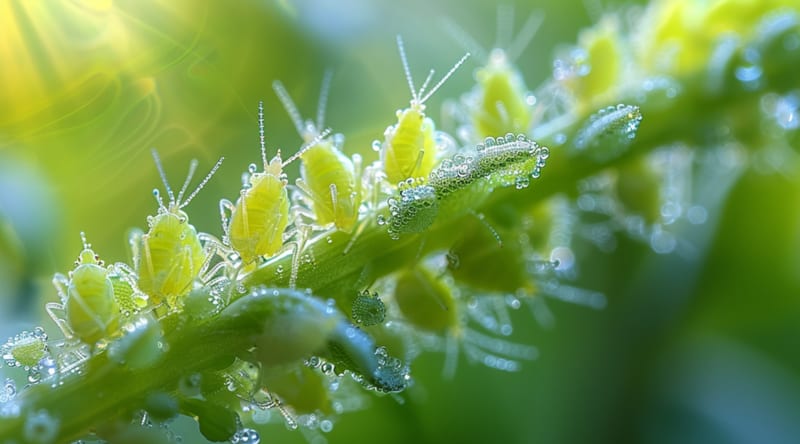
Spring in Surrey starts earlier than it used to. The Met Office data for the southeast shows a measurable shift in average spring temperatures over the past twenty years, and that means pest species are active sooner. On our maintenance rounds, we're now finding aphids and vine weevil damage from mid-March in sheltered gardens, particularly on the warmer sandy soils around Woking and Camberley.
Here are the pests we encounter most frequently across our client gardens, what to look for, and the responses that work in practice.
Box tree moth (Cydalima perspectalis)
This is the one causing the most damage across Surrey right now. Box tree moth was first recorded in the UK in 2007 and has spread rapidly through the southeast. We've seen it in gardens from Weybridge to Dorking, and it's now effectively county-wide.
What to look for: Webbing between box leaves, often with dark frass (caterpillar droppings) visible. The caterpillars are green with black heads and black and white striped bodies. In heavy infestations, entire hedges can be stripped to brown skeletons within weeks. The adult moths are white with brown borders and often found resting on box plants or nearby walls in the evening.
When it's active: Caterpillars can appear from March onwards in mild years. There are typically two to three generations per season in the southeast, with the most damage occurring in summer.
What works: Pheromone traps help monitor moth activity and time your response. Bacillus thuringiensis (Bt) sprays are effective against the caterpillars if applied when they're small. Timing is critical. Hand-picking works for small infestations. For severe cases, we've helped several clients replace box with alternatives that give a similar look: Ilex crenata (Japanese holly) and Taxus baccata (yew) both clip well and aren't affected.
What doesn't work: Ignoring it. Box tree moth won't go away on its own, and unmanaged populations will kill established box hedging.
Vine weevil (Otiorhynchus sulcatus)
The vine weevil is one of the most destructive pests in Surrey gardens, and many people don't realise they have it until a plant collapses. The adults feed on leaves, but the real damage is done underground by the larvae, which eat through root systems.
What to look for: Distinctive notching on leaf edges (semicircular bites taken from the margins) is the signature of adult feeding. This is cosmetic and won't kill the plant. The danger is the larvae: small, white, C-shaped grubs with brown heads found in the root zone. You'll usually discover them when you pull out a plant that has mysteriously wilted despite adequate watering. Container plants, heucheras, strawberries, and primulas are particularly vulnerable.
When it's active: Adults feed from spring through autumn, mainly at night. Larvae are present in the soil from autumn through spring, doing most damage over winter and into early spring when they're at full size.
What works: Biological control using nematodes (Steinernema kraussei) applied as a drench in spring (March to April) and autumn (September to October) when soil temperatures are above 5°C. This is the most effective non-chemical approach and the one we use on our maintenance contracts. For containers, using a vine-weevil-resistant compost or adding nematode granules at potting time helps. Check susceptible plants regularly and crush any adults you find (they can't fly, so they're slow to escape).
What doesn't work: Hoping for the best. Vine weevil populations build up over years if unchecked.
Lily beetle (Lilioceris lilii)
Bright red, 8mm long, and unmissable. Lily beetle has been spreading across the southeast since the 1990s and is now established throughout Surrey. It attacks lilies and fritillaries.
What to look for: The adults are a vivid scarlet red with black heads and legs. The larvae are less obvious because they cover themselves in their own dark, wet excrement as camouflage (unpleasant but effective). Look for damaged leaves, eaten flowers, and dark slimy blobs on the undersides of lily leaves.
When it's active: Adults emerge from soil in late March to April. Egg-laying begins in April and continues through summer. Both adults and larvae eat the leaves and flowers.
What works: Regular hand-picking is the most effective approach for most garden-scale infestations. Check plants every few days from April onwards, looking on the undersides of leaves. The adults drop to the ground and play dead when disturbed, landing on their backs with their dark underside up so they're hard to spot against soil. Hold a hand or container underneath when you approach. Remove larvae and eggs on sight.
What doesn't work: Ignoring early adults. A few beetles in April become a full infestation by June.
Rosemary beetle (Chrysolina americana)
A relatively recent arrival in UK gardens, rosemary beetle is now common across Surrey. It feeds on rosemary, lavender, sage, and thyme.
What to look for: Striking metallic green and purple striped beetles, about 8mm long. The larvae are grey and slug-like. Both feed on the leaves and flowers of aromatic herbs, particularly from late summer through winter and into spring.
When it's active: Most active in autumn and early spring. They're often found basking on rosemary and lavender on mild winter days.
What works: Hand-picking. Shake the plant over a sheet of white paper or a container and collect the beetles that drop. Because they feed on plants we use in cooking, chemical controls are inappropriate. The damage is rarely severe enough to kill established plants, but heavy infestations reduce flowering and can make plants look ragged.
Aphids
Still the most common pest on our rounds, and the one most people overreact to.
What to look for: Dense clusters of small, soft-bodied insects on new growth, flower buds, and shoot tips. Green, black, and pink species are all common in Surrey. Sticky honeydew on leaves below the colony (which then develops sooty mould) is another indicator. Curled or distorted new leaves suggest aphid feeding even if the colony isn't immediately visible.
When they're active: From March onwards, with peak populations in May and June. Aphid reproduction is remarkably fast: females can produce live young without mating, and a single aphid can generate billions of descendants in a season under ideal conditions.
What works: Patience, mostly. Aphid populations in established gardens are naturally controlled by ladybirds, hoverflies, lacewings, and parasitic wasps. These predators need 2-3 weeks to build up after aphids appear. If you spray during that window, you kill the predators and lose your best long-term defence. For localised infestations, a strong jet of water from a hose knocks aphids off and many won't find their way back. For severe infestations on valuable plants, a fatty-acid-based spray (available from garden centres) kills on contact without harming beneficial insects once dry.
What doesn't work: Broad-spectrum insecticides. They kill the predators that would have solved the problem for you.
Slugs and snails
Particularly problematic on Surrey's heavier clay soils, which retain the moisture slugs need.
What to look for: Irregular holes in leaves (often with slime trails), seedlings eaten to ground level overnight, and damage to hostas, dahlias, delphiniums, and lettuce. Damage is worst in spring when new growth is soft and vulnerable.
What works: A combination approach. Evening patrols with a torch and a container are surprisingly effective. Copper tape around containers has some evidence behind it (slugs receive a mild electric shock from the reaction between their slime and the copper, though this degrades over time). Nematode drenches (Phasmarhabditis hermaphrodita) target slugs in the soil. Encouraging ground beetles, thrushes, and hedgehogs provides ongoing control. Choosing slug-resistant plants for problem areas (astilbe, geranium, ferns, grasses) reduces the issue at source.
What doesn't work: Metaldehyde slug pellets were banned in the UK in 2022 due to their impact on wildlife. Ferric phosphate pellets are the legal alternative and are less toxic to other animals, but they're still a treatment, not a solution.
The bigger picture
The pests we encounter most often in Surrey gardens are manageable without heavy chemical intervention. The pattern we see repeatedly is that gardens managed for biodiversity, with mixed planting, habitat features for beneficial insects, and restrained use of pesticides, have fewer pest problems over time than gardens that reach for a spray at the first sign of damage.
Spring is when pest management begins for the season. If your garden is coming out of winter looking tired and you want help getting it into shape, our garden aftercare and maintenance service covers seasonal care, pest monitoring, and long-term garden health across Surrey.
For a more detailed guide on getting your garden ready for the growing season, read our piece on spring garden prep in Surrey.
Get a free quote for a maintenance plan that keeps on top of pests and keeps your garden thriving.